
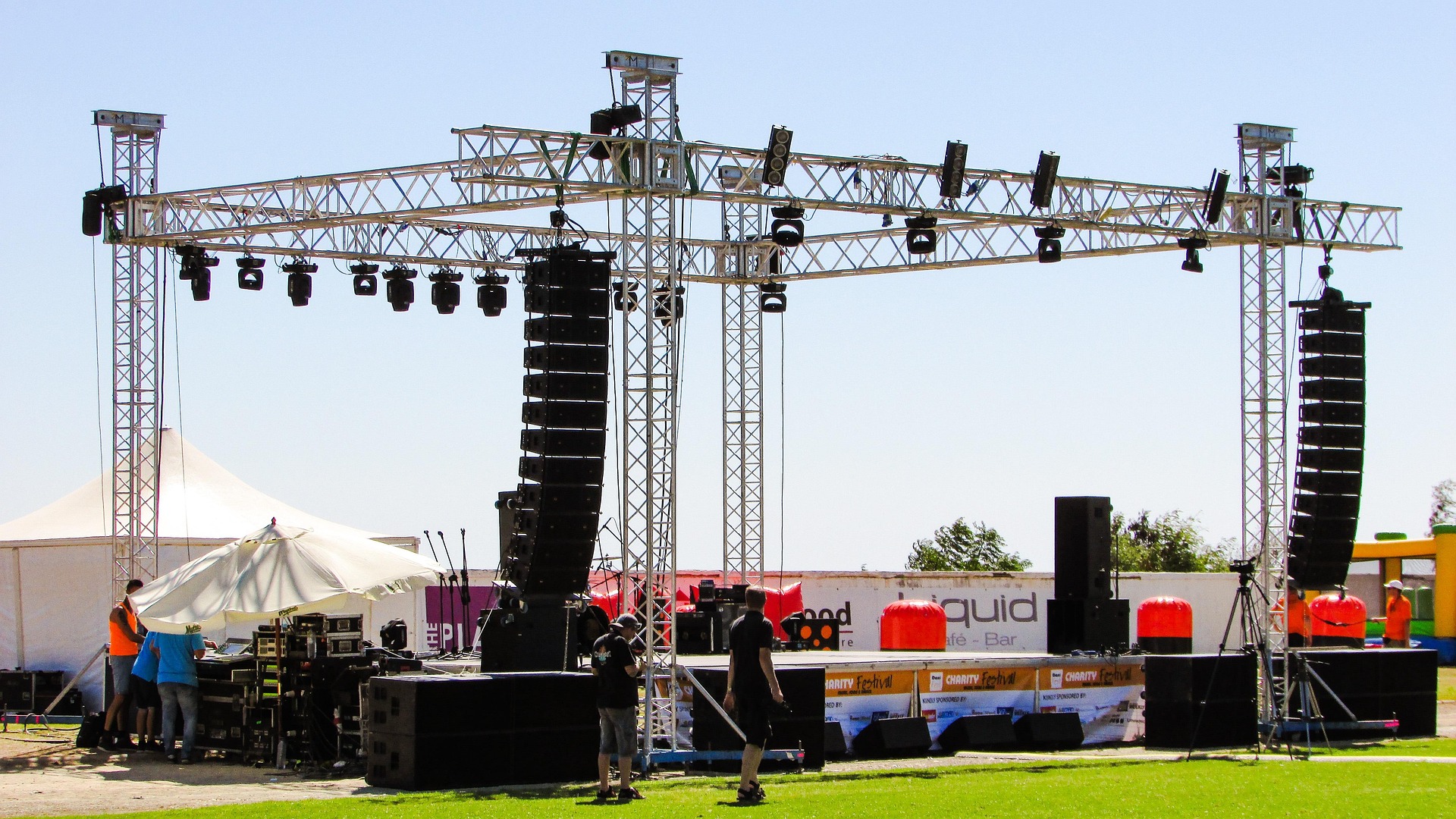
Outdoor event audio needs to reach every guest clearly without disturbing nearby residents or creating hazards around the site.
A suitable plan accounts for the audience, venue layout, weather and programme before any equipment arrives.
Start gathering details several weeks ahead, including site access times and the running order.
A simple plan showing the stage, audience areas, power supplies and neighbouring properties will help an audio provider recommend a suitable setup and prepare for likely problems.
Assessing Venue Dimensions and Crowd Size
Measure the usable audience area instead of relying on the venue’s advertised capacity.
Trees, marquees, catering areas and restricted zones can change where people gather, while a long, narrow site may need several speaker positions to provide even coverage.
Share your expected attendance and event format with the audio team.
A speech for 150 seated guests has different requirements from live entertainment for 800 people standing across a field.
Mark the stage direction and furthest listening point on your plan.
Speakers can then be positioned to cover the crowd at a comfortable level, without making the front rows uncomfortably loud.
Arrange a site visit for large or unusually shaped venues.
It offers a chance to check nearby buildings, access routes and available power.
Mitigating Wind and Weather Challenges
Check the weather forecast regularly during the week before the event, then confirm the latest conditions on the morning itself.
Wind can carry sound away from part of the audience and towards neighbouring homes, while heavy rain may affect the schedule and safe use of electrical equipment.
Agree on weather protection with your supplier before setup day.
Control desks and electrical connections need suitable covers, but equipment also requires ventilation.
Never improvise by wrapping powered units in plastic.
Consider nearby homes and businesses when planning speaker positions and volume levels.
Agree on acceptable sound limits with the venue and check whether any local noise restrictions apply.
During the event, monitor levels from different points around the site rather than relying only on what sounds comfortable beside the mixing desk.
This helps keep audio clear for guests while reducing unnecessary noise beyond the event area.
Set clear thresholds for pausing activity during high winds, lightning or heavy rain.
Your event plan should identify who makes that decision and how instructions will reach staff and guests.
Secure lightweight covers, signs and temporary structures too, as loose items can damage audio equipment or block cable routes.
Budgeting for Professional PA System Hire
Request an itemised quote based on the full event timetable, including setup and removal.
The cost may cover equipment delivery, system design, technical staff, stage monitoring and operation during the programme.
Ask what happens if access is delayed or the event runs beyond its booked finish time.
For festivals, concerts and corporate functions, professional PA system hire gives organisers access to equipment from specialist brands such as Funktion-One, EAW, Turbosound and KV2.
The right system depends on the audience size, venue layout and type of programme.
Ask the supplier whether your quote includes system design, delivery, setup, sound engineering and on-site technical support, and make sure each responsibility is clear before confirming the booking.
Allow a contingency of around 10 per cent for approved changes, extra operating hours or revised equipment needs.
Compare quotes on scope and staffing, not solely on the total price.
Confirm VAT, transport, accommodation and cancellation terms before approving the booking.
Coordinating Microphones for Speeches
Create a microphone list from the running order.
Note who will speak, where they’ll stand and whether they need their hands free.
A lectern microphone suits formal presentations, while a wireless handheld model works well for audience questions.
Head-worn or clip-on microphones may suit presenters who move around.
Microphone choice is just one part of delivering a professional event experience.
This article on using professional AV services explores how suitable audio and visual equipment can support presentations, audience engagement and event recordings.
Book a spare microphone and fresh batteries for key sessions.
Assign one event team member to collect, label and distribute equipment, especially when several speakers appear close together.
Schedule a soundcheck before guests enter.
Each speaker should use the microphone in their normal speaking voice whilst an engineer checks levels from several audience positions.
Remind presenters to keep handheld microphones close to their mouths and avoid standing directly in front of speakers, where feedback is more likely.
Safe Distribution of Live Audio Cables
Map cable routes before unloading starts. Keep them away from entrances, emergency exits and busy catering paths wherever possible.
If a route must cross a pedestrian area, use purpose-made cable ramps that lie flat and remain clearly visible.
Follow recognised electrical safety guidance for outdoor equipment and arrange inspection by a competent person.
Connectors should be suitable for the conditions, protected from standing water and positioned where guests cannot interfere with them.
Avoid tightly coiling live extension leads because heat can build up inside the coil.
Separate audio and power cables where practical to reduce unwanted noise, then secure each run without crushing it.
A final walk-through before opening should check ramps, connections and access routes, followed by regular inspections throughout the event.
Good outdoor sound begins well before the first announcement.
Give the audio team an accurate site plan, final running order and named event contact at least a few days ahead, then leave enough time for testing before the gates open.
That quiet preparation is what helps every word reach the back row clearly.
Hope you’ve found our article, How to Plan Outdoor Event Audio for Clear Sound and Safe Setup useful.
Thank you for taking the time to read my post. If you’d like to add a comment or thought on this post, please use the comments section below. I can also be contacted via the online contact form. Keep up to date with the latest news on social media.