
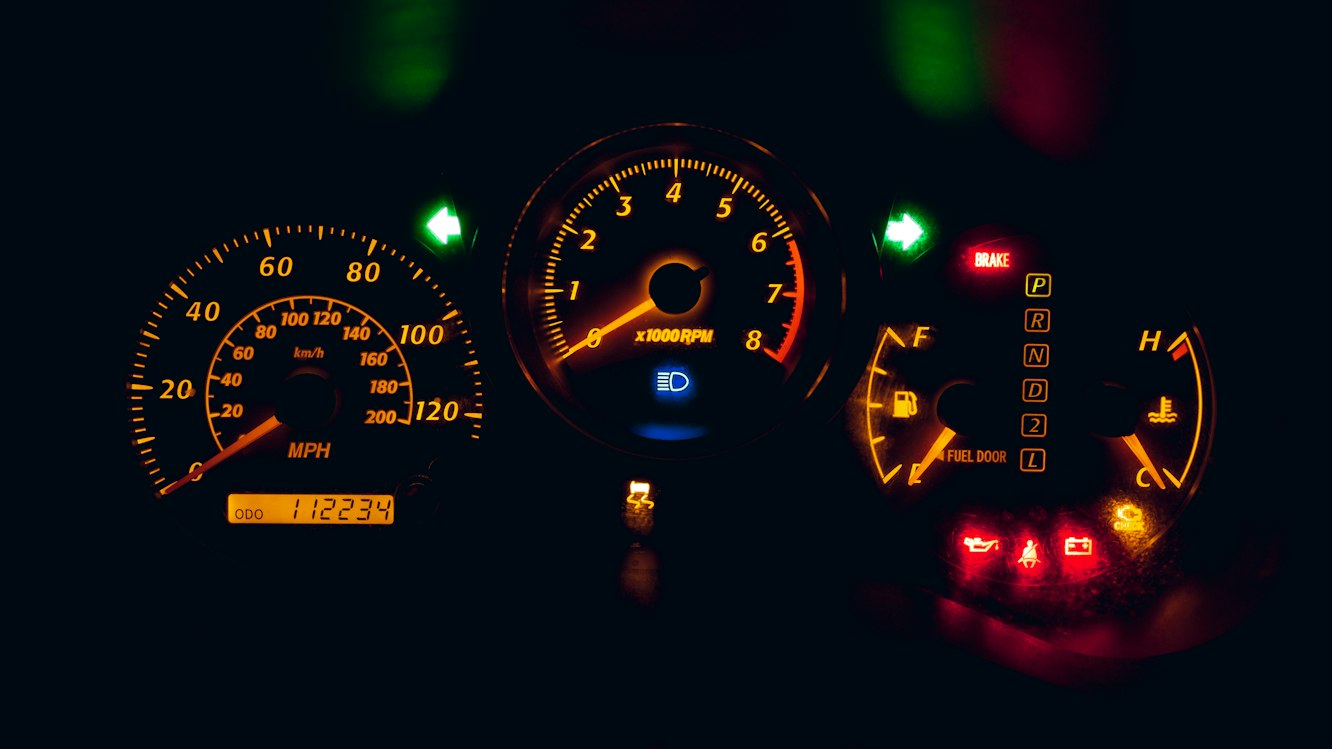
A warning light that stays on is your car’s way of reporting a fault that needs attention.
Some alerts allow you to finish a short journey safely, while others call for an immediate stop.
Ignoring either type can turn a failed sensor or low fluid level into a breakdown and a much larger repair bill.
Learn what the symbol means, note how the car behaves and arrange a diagnostic check before clearing any stored codes.
What Warning Lights Actually Signal
Dashboard symbols cover engine management, braking, tyre pressure, emissions control and other vehicle systems.
Their colour often indicates urgency.
Red generally means stop as soon as it’s safe, amber points to a fault requiring prompt investigation and green or blue usually confirms that a feature is operating.
Consult your handbook because symbols and instructions vary between models.
A reliable dashboard warning lights guide can offer extra context, but it can’t diagnose your specific car.
Pay attention to combinations too.
An engine light alongside unusual noise, smoke or rising temperature deserves more urgent action than an isolated alert with no change in performance.
The Danger of Limp Mode Triggers
Limp mode limits power to protect the engine, gearbox or emissions equipment after the control unit detects a serious reading.
You may notice sluggish acceleration, restricted engine speed or a gearbox that remains in one gear.
Common triggers include boost-pressure faults, overheating, sensor failures and blocked emissions components.
Although the vehicle might still move, car limp mode should only help you reach a safe place or suitable repairer.
Don’t continue a long trip or push the engine harder to compensate for lost power.
If limp mode appears during a journey, reduce speed smoothly, avoid heavy acceleration and stop somewhere safe.
Record every warning message before switching off the ignition.
Decoding Electronic Fault Patterns
Modern cars store diagnostic trouble codes when sensor readings fall outside expected limits.
A code can identify the affected circuit, but it doesn’t always identify the failed part.
For example, an oxygen-sensor code could result from damaged wiring, an air leak or another engine fault that has altered the exhaust reading.
A basic code reader can provide useful information, particularly if a warning appears intermittently.
Write down the full code and the conditions at the time, including engine temperature, speed and fuel level.
Avoid repeatedly clearing codes.
This removes useful evidence and may reset emissions readiness data without resolving the cause.
A technician should inspect live readings, connectors and related components before recommending replacement parts.
Exploring Permanent System Fixes
Ask for a diagnosis that addresses the underlying fault and includes a clear breakdown of parts, labour and testing.
Depending on the findings, a lasting repair might involve replacing a damaged sensor, repairing wiring, cleaning a blocked component or installing an approved replacement system.
Diesel owners researching specialist software services may encounter information about AdBlue delete cost.
Before considering any system alteration, check the rules that apply where the vehicle is registered and used.
Changes to factory emissions controls may breach road-use requirements, invalidate insurance or cause inspection failure.
For a road vehicle, prioritise a compliant repair that restores normal operation.
Ask the provider to explain warranty coverage and post-repair testing in writing.
Routine Checks to Prevent Breakdowns
Regular checks help you spot small problems before the dashboard fills with alerts.
Once a month, inspect engine oil, coolant and screenwash when the car is parked on level ground and the engine is cool.
Check tyre pressures against the manufacturer’s figures, including the spare if your vehicle has one.
Keep the battery terminals clean and arrange a battery test if starting becomes slow.
Low voltage can produce several unrelated warnings because control modules need a stable electrical supply.
During each service, ask for damaged wiring, fluid leaks and stored fault codes to be checked.
If a warning returns after repair, note how soon it reappears and return promptly.
That timing may reveal an intermittent connection or an incomplete fix.
Treat a persistent light as a repair request from the car, not an inconvenience to hide.
Photograph the display, check the handbook and book a proper diagnosis while the vehicle can still reach the workshop under its own power.
Hope you’ve found our article, Stop Ignoring Persistent Dashboard Warning Lights useful.
Thank you for taking the time to read my post. If you’d like to add a comment or thought on this post, please use the comments section below. I can also be contacted via the online contact form. Keep up to date with the latest news on social media.