
Next-day delivery depends on a tightly connected chain of software, machinery and people working to strict deadlines.
An online order placed in the evening may need to be picked, packed, labelled and loaded within a few hours, leaving little room for slow systems or equipment faults.
Much of this activity happens out of sight.
Stock-management platforms decide where products should be stored, scanners confirm each movement, and loading bay equipment helps transfer thousands of parcels into waiting vehicles.
Understanding this hidden technology explains how retailers meet short delivery windows and where delays are most likely to occur.
Rising Consumer Expectations
Customers increasingly treat delivery speed as part of the product itself.
A competitive price may attract attention, but an unclear arrival date or expensive delivery option can still lead to an abandoned basket.
This pressure becomes particularly noticeable during seasonal peaks when order volumes rise quickly, and transport networks are already busy.
Published delivery speed statistics show how strongly shoppers value quick and predictable fulfilment.
Expectations also differ by product type.
A customer ordering replacement printer ink may want it tomorrow, whilst someone buying a large appliance may care more about a reliable time slot and careful handling.
Retailers respond by displaying live stock information, offering order tracking and setting clear cut-off times.
Those promises must reflect the warehouse’s real capacity.
If a website accepts next-day orders until 11 pm but the final collection leaves at 10.30 pm, disappointment is built into the system.
Accurate communication is therefore as valuable as raw speed.
Businesses should review missed delivery data, compare advertised times with actual performance and adjust cut-offs by postcode, product size and stock location.
A slightly earlier deadline that consistently works will usually serve customers better than an ambitious promise followed by an apology.
Inside the Fulfilment Hub
The fulfilment hub turns digital orders into physical parcels.
As soon as payment clears, an order management system checks stock and sends instructions to the most suitable warehouse.
The warehouse management system then chooses a pick location, taking account of product availability, staff workload and the carrier’s departure time.
Barcode scanners and radio-frequency identification tags record movement through the building.
In a manual operation, a handheld device guides an employee along an efficient picking route.
Larger sites may use conveyors, automated storage systems or mobile robots to bring goods to packing stations.
Weight sensors can flag a parcel that is too light, which may indicate that an item has been missed.
Packing software selects an appropriate box size and prints the correct carrier label.
This reduces space, controls packaging costs and helps vehicles carry more orders.
Shipment data then passes to the carrier before the parcel reaches the loading bay, giving the depot time to plan its onward route.
Industry resources covering fulfilment and delivery show how closely retail operations and transport performance are connected.
Managers can improve their own operation by tracking several practical measures: picking accuracy, orders processed per hour, packing errors and the time between order release and vehicle loading.
A delay at any one stage can cause an entire batch to miss its collection.
Maintaining Dock Equipment
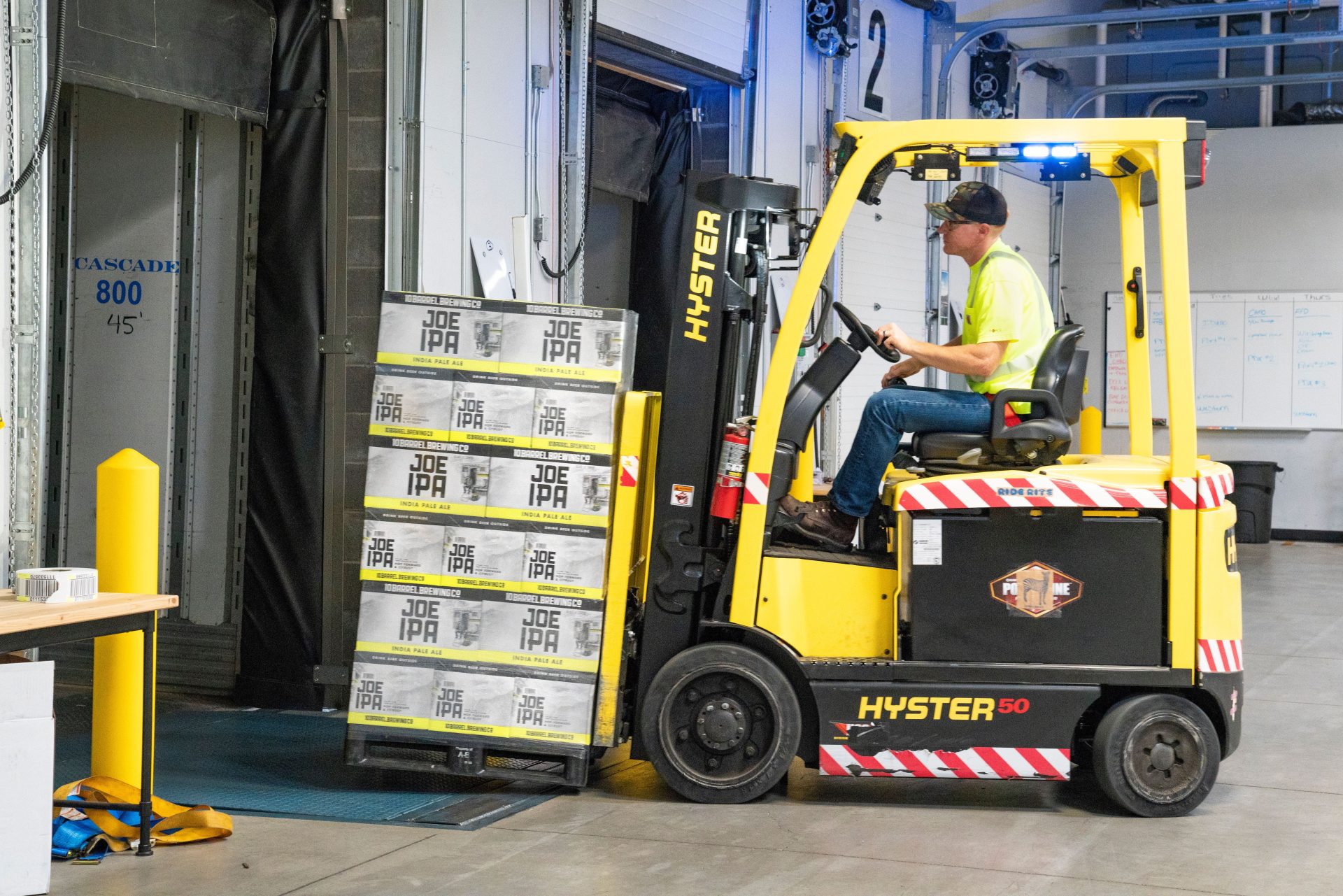
The loading bay is the point where warehouse systems meet the transport network.
Dock levellers bridge the height difference between a building and a vehicle, allowing staff and handling equipment to move goods across the gap.
Doors, seals, shelters and vehicle restraints also need to work correctly if loading is to remain safe and efficient.
Routine checks should cover visible damage, unusual noises, slow movement, fluid leaks and controls that respond inconsistently.
Staff can report visible warning signs at the start of a shift, but they should not attempt repairs or adjustments unless they are trained and authorised to do so.
Planned servicing and technical inspections should follow the manufacturer’s instructions and applicable safety requirements.
A leveller operating hundreds of times each day will need closer attention than one used for occasional collections.
These checks should form part of a wider workplace safety approach that includes equipment servicing and clear procedures for reporting potential hazards.
If a dock leveller develops a fault or shows signs of reduced performance, the problem should be assessed before it causes a more serious disruption.
Businesses needing inspection, planned maintenance or repair support can contact specialist dock leveller engineers for help with hydraulic failures, electrical faults, mechanical wear and impact damage.
Regular servicing and timely repairs can help maintain safe and reliable loading bay operations.
Maintenance records also deserve careful treatment.
Log the date, reported symptom, repair completed and any parts replaced.
This history can reveal recurring failures and support better decisions about refurbishment or replacement.
It also helps managers schedule work outside peak loading periods.
Keeping essential spares available, where recommended by the manufacturer, may shorten a breakdown without encouraging staff to attempt repairs beyond their training.
Preventing Goods Transit Damage
Speed loses its value when an order arrives crushed, wet or incomplete.
Damage creates replacement costs, extra transport movements and customer service work.
It can also remove stock from sale at the busiest time of the week.
Protection begins with the right packaging.
A box should suit the product’s dimensions and weight, with enough internal material to stop movement.
Fragile items need separation from hard surfaces, whilst liquids require secure closures and suitable secondary containment.
Packing teams should use clear standards for each product category instead of relying on personal judgement during a busy shift.
Technology can catch common mistakes.
Automated weighing compares a finished parcel with its expected weight, cameras record packing quality, and dimension scanners identify cartons that fall outside carrier limits.
Some businesses use shock or tilt indicators for sensitive goods, giving handlers a visible warning if a package has been treated incorrectly.
Loading practice matters too.
Heavy cartons belong at the bottom of stable stacks, and fragile goods need protection from shifting loads.
Teams should inspect pallets, wrapping and labels before dispatch.
A short hold at the loading bay is preferable to sending a visibly unstable consignment into the network.
Guidance on true next-day delivery also underlines the need to coordinate stock, fulfilment and carrier operations.
Businesses can learn from damage reports by recording the product, packaging method, carrier route and point at which the issue was discovered.
Patterns often reveal a specific packing station, carton size or loading process that needs attention.
Future Loading Bay Systems
Loading bays are becoming more connected to the rest of the fulfilment operation.
Sensors can already report door position, equipment status and the length of time a vehicle remains at a bay.
When this information feeds into a central platform, managers gain a live view of congestion and can reassign vehicles before queues grow.
Predictive maintenance is another practical development.
Equipment can record cycle counts, operating temperatures and changes in movement.
Software then identifies behaviour that differs from the normal pattern, allowing an engineer to inspect a component before it causes a stoppage.
The value lies in scheduling a repair during a quiet period instead of losing a bay during the evening dispatch rush.
Future systems may also improve energy use.
Doors that communicate with vehicle arrival software can remain closed until a bay is ready, reducing heat loss from the building.
Smart lighting can respond to occupancy, whilst digital booking tools can spread collections across the working day.
Vehicle identification may automatically confirm that the correct arrival has reached the assigned bay.
Human oversight will remain necessary.
Sensors need testing, alerts need sensible thresholds, and staff must know how to respond when equipment reports a problem.
Too many low-value notifications can lead to genuine warnings being missed.
The most useful starting point is a clear record of current delays.
If vehicles regularly wait 20 minutes for an available bay, or loading equipment often slows during the same shift, that evidence identifies where connected systems and targeted maintenance could produce a measurable improvement.
Hope you’ve found our article, How Warehouse Technology and Equipment Keep Next-Day Deliveries Moving useful.
Thank you for taking the time to read my post. If you’d like to add a comment or thought on this post, please use the comments section below. I can also be contacted via the online contact form. Keep up to date with the latest news on social media.