
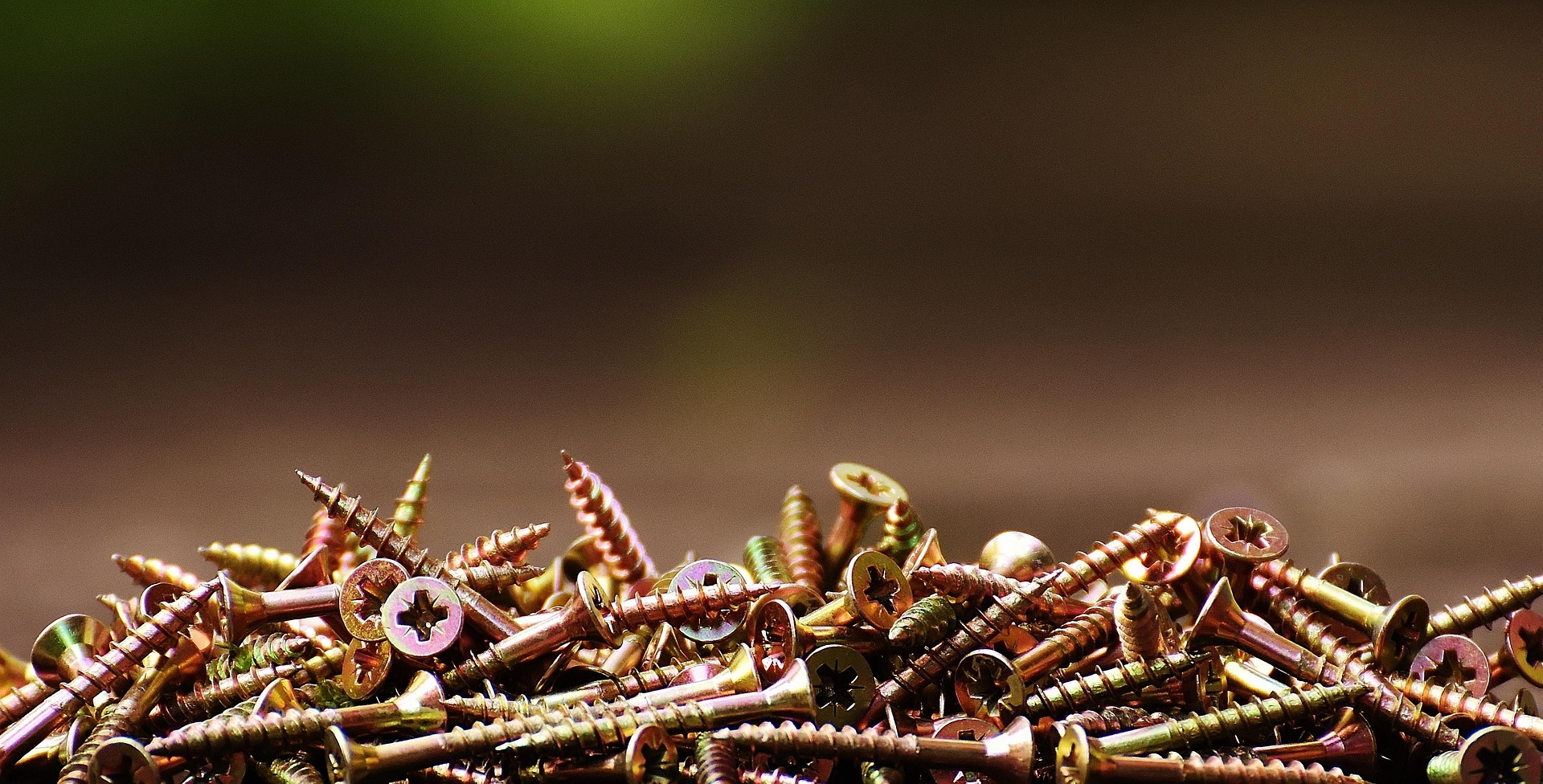
Walk into any hardware shop and you will quickly discover that a screw is never just a screw.
There are different lengths, heads, threads, materials and finishes, all designed for particular tasks.
Choosing the wrong one can lead to split timber, loose fittings or a screw that rusts long before it should.
The good news is that you do not need to become a fixing expert overnight.
Once you understand a few basics, picking the right screw becomes much easier.
Start With the Material
Your first question should be simple: what are you fastening?
Wood screws are designed to grip timber and usually have a sharp point that helps them enter the material cleanly.
Masonry screws are made for brick, block and concrete, although they often require a pilot hole.
Drywall screws are intended for fixing plasterboard, while self-tapping screws can cut their own thread into materials such as metal or plastic.
Using a screw designed for the surface will give you a stronger, neater and more reliable result.
Choose the Right Length
A screw needs to be long enough to hold the materials together securely without passing all the way through the other side.
As a general rule, aim for roughly two-thirds of the screw to sit inside the supporting material.
For smaller household jobs, such as attaching brackets, hinges or thin pieces of timber, 25mm screws may provide the compact length you need without creating unnecessary protrusion.
Always check the combined thickness of the materials before drilling.
It is far better to measure twice than discover a sharp screw tip sticking out afterwards.
Pay Attention to the Head
The screw head affects both its appearance and how it sits against the surface.
Countersunk screws are shaped to sit flush with the material, making them useful for furniture, joinery and other jobs where you want a smooth finish.
Pan-head screws remain slightly raised and work well with brackets, metal fittings and electrical components.
You should also check the drive type.
Phillips and Pozidriv screws are common, while Torx heads provide excellent grip and reduce the chance of the driver slipping.
Think About the Environment
Indoor screws may not cope well outdoors.
Exposure to moisture can cause ordinary steel screws to corrode, weaken and leave rust marks.
For exterior projects, bathrooms, kitchens and other damp locations, choose corrosion-resistant options such as stainless steel or specially coated screws.
Stainless steel is particularly useful where durability and appearance both matter.
Decide Whether You Need a Pilot Hole
A pilot hole is a small hole drilled before inserting the screw.
It can make driving easier, prevent timber from splitting and help the screw enter at the correct angle.
Pilot holes are especially helpful when working near the edge of a piece of wood, using hardwood or fitting larger screws.
The drill bit should be slightly narrower than the main body of the screw so the thread still has enough material to grip.
Do Not Forget the Right Tools
Even the perfect screw can cause problems when paired with the wrong screwdriver bit.
A poorly fitting bit may slip, damage the screw head and make removal difficult.
Match the bit carefully, apply steady pressure and avoid overtightening.
The screw should feel secure, but forcing it too far can strip the thread or damage the surrounding material.
Choosing screws becomes far less confusing when you focus on the material, length, head, environment and tools.
Take a moment to check each of these before starting, and your next DIY job should be stronger, cleaner and much less frustrating.
Hope you’ve found our article, A Beginner’s Guide to Picking the Right Screw for the Job useful.
Thank you for taking the time to read my post. If you’d like to add a comment or thought on this post, please use the comments section below. I can also be contacted via the online contact form. Keep up to date with the latest news on social media.