
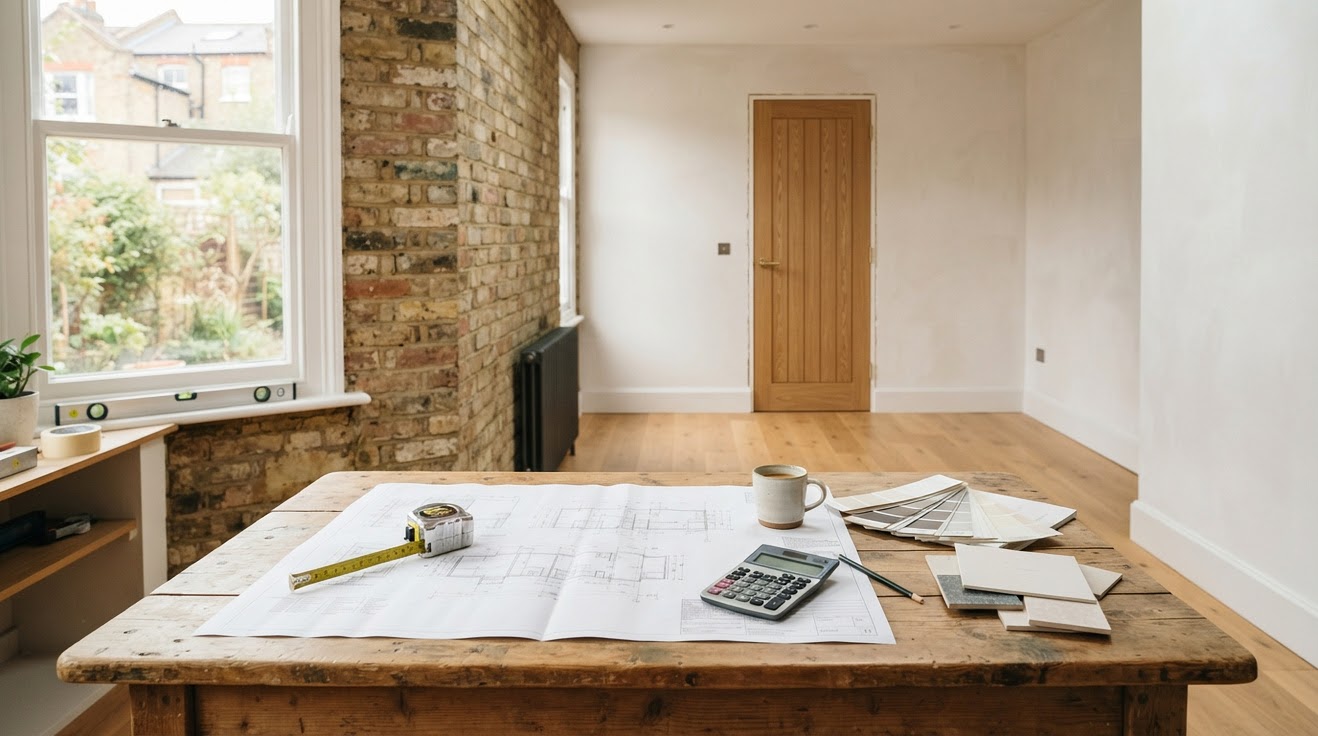
Refurbishing a property can start with a fairly sensible budget but quickly become more expensive once work gets underway.
You might lift old flooring and find damaged boards underneath or discover outdated wiring behind a wall.
Material prices can also change and small additions soon add up.
While you can’t plan for every surprise, you can give yourself much more control over what you spend by doing your homework and making key decisions early.
Understand the property before work starts
Before agreeing to major refurbishment work, get a clear idea of the condition of the building.
A survey can flag problems that may affect your plans, while specialist inspections can investigate areas such as electrics, plumbing, damp or the roof.
Thinking about the finished result early can also help you budget more accurately.
If you know a room will need new plaster before decorating, for example, you can allow for the work from the start and avoid having to revisit freshly finished walls later.
Finding out what the property needs at this stage gives you time to understand the likely costs and build them into your budget.
Sort out permissions before committing your budget
Check whether your plans need approval before ordering materials or booking trades.
Depending on the property and the work involved, you may need planning permission, building regulations approval or listed building consent.
Flats and leasehold properties can also come with restrictions set by the freeholder or lease.
Speak to your local authority or relevant building professionals early enough to establish which requirements apply to your project.
Put the work in a sensible order
The sequence of a refurbishment can have a surprisingly large effect on the final bill.
Structural repairs and first-fix plumbing or electrics usually need to happen before plastering, decorating and finished flooring.
Map out the jobs with your main contractor before anyone starts.
If an electrician needs to chase a newly decorated wall because sockets were added late, for instance, you will also need to pay someone to repair and redecorate it.
Think about purchasing at this stage too.
Items with longer lead times, such as bespoke windows or particular kitchen units, can hold up several trades if they arrive late.
Compare what each quote actually includes
The cheapest headline figure does not necessarily represent the lowest overall cost.
One contractor might include waste removal and finishing work, while another might expect you to arrange those separately.
Ask for an itemised quote that separates labour from materials and clearly identifies exclusions.
Make sure to check allowances for fixtures and finishes too.
Finally, keep a contingency rather than allocating every pound at the outset.
That gives you room to deal with any issues without cutting corners elsewhere in the refurbishment.
Hope you’ve found our article, How to keep property refurbishment costs under control useful.
Thank you for taking the time to read my post. If you’d like to add a comment or thought on this post, please use the comments section below. I can also be contacted via the online contact form. Keep up to date with the latest news on social media.