
Patient information is some of the most sensitive data out there, and healthcare organisations have a huge responsibility to keep it protected.
Just think about how much information hospitals, GP surgeries and other healthcare providers handle every day.
Medical histories, prescriptions, test results and personal details all need to be stored securely while remaining accessible to the professionals who need them.
With cyber threats becoming increasingly sophisticated, healthcare organisations are relying on technology to strengthen their security.
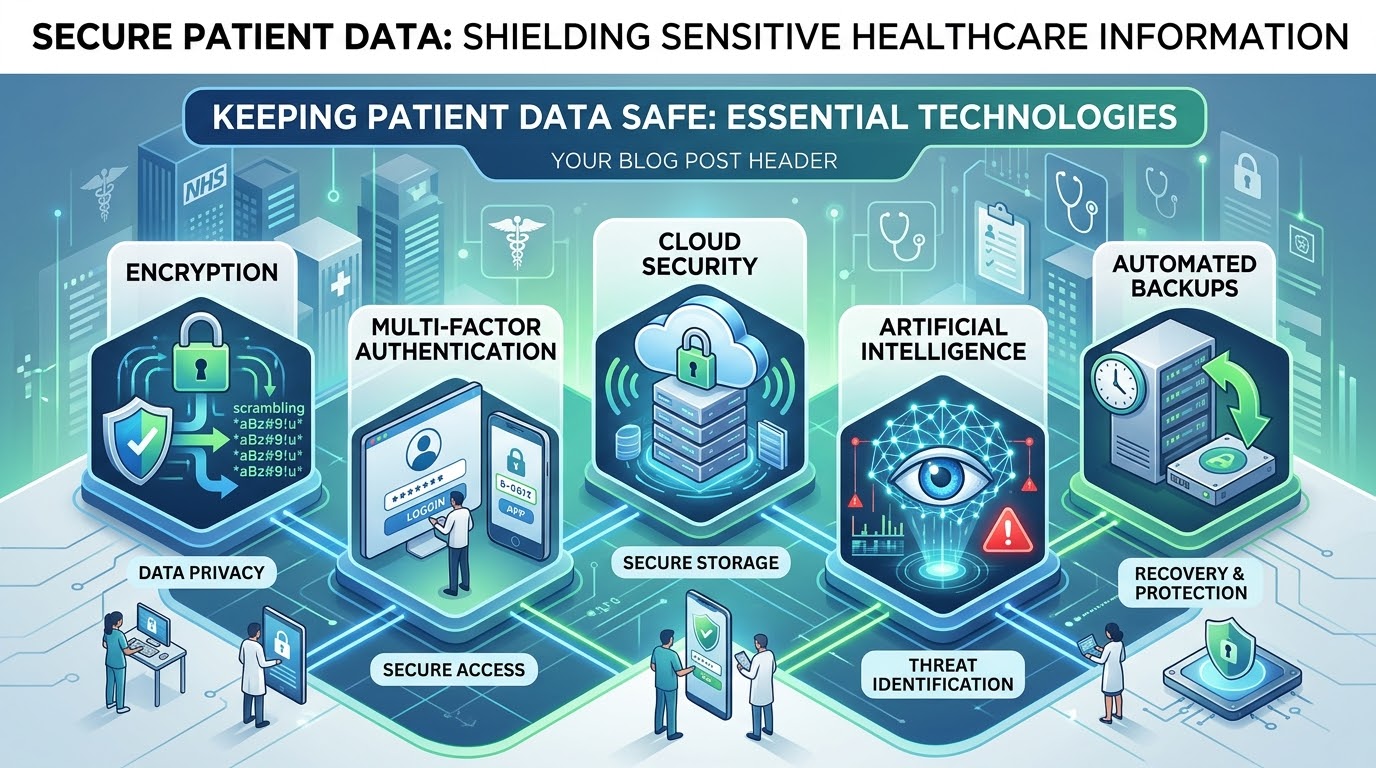
From encryption to artificial intelligence, several technologies work together to protect sensitive information and reduce the risk of data breaches.
Encryption Keeps Information Private
One of the most effective ways to protect patient data is through encryption.
This technology converts information into an unreadable format that can only be understood by someone with the correct digital key.
It’s particularly useful when medical records are transferred between hospitals, GP surgeries and other healthcare providers, as it helps prevent intercepted information from being read.
Encryption can also protect information stored on computers, servers and portable devices.
This means healthcare organisations can add another layer of security to the systems they use every day, reducing the risk of sensitive details falling into the wrong hands.
Multi-Factor Authentication Controls Access
Passwords are an important part of cybersecurity, but they’re not always enough.
They can be stolen, guessed, or accidentally shared, potentially putting confidential patient information at risk.
Multi-factor authentication helps address this by requiring users to verify their identity through more than one method, such as entering a password and confirming their identity through an authentication app.
This is especially valuable in busy healthcare environments where large numbers of employees need access to different systems throughout the day.
It helps ensure that only authorised individuals can access sensitive information.
Cloud Technology Supports Secure Storage
With healthcare organisations handling enormous amounts of information, reliable data storage is essential.
Cloud technology allows patient records to be stored digitally and accessed by authorised professionals when needed.
However, cloud systems still require appropriate security measures, including encryption, access controls and regular monitoring.
Having the right technology partner can make managing these systems easier.
For example, Cisilion provides IT services for NHS trusts, helping healthcare organisations develop and manage the digital infrastructure they depend on.
Artificial Intelligence Identifies Potential Threats
Cybercriminals are constantly developing new ways to target organisations, making it difficult for security teams to identify every potential threat manually.
Artificial intelligence can help by analysing activity across digital systems and identifying unusual behaviour, such as suspicious login attempts or unexpected access to patient records.
By flagging potential problems early, these technologies give healthcare organisations a better chance of responding before sensitive information is compromised.
They can also help security teams prioritise threats and investigate unusual activity more efficiently.
Automated Backups Prevent Data Loss
Protecting patient information isn’t just about preventing cyberattacks.
Healthcare organisations also need to prepare for technical failures, accidental deletions and other unexpected disruptions.
Automated backup technology regularly creates secure copies of important records, helping organisations recover information if something goes wrong.
These systems can be particularly valuable when restoring operations after a ransomware attack or major technical issue.
Regular testing is also essential to make sure backups can be recovered successfully when they’re needed.
Keeping Patient Data Safe For The Future
As healthcare services become increasingly digital, protecting patient information will remain a major priority.
The technology available today gives healthcare organisations more opportunities to prevent unauthorised access, detect threats and recover from unexpected problems.
Hope you’ve found our article, A Look At The Technology That Keeps Patient Data Safe useful.
Thank you for taking the time to read my post. If you’d like to add a comment or thought on this post, please use the comments section below. I can also be contacted via the online contact form. Keep up to date with the latest news on social media.