
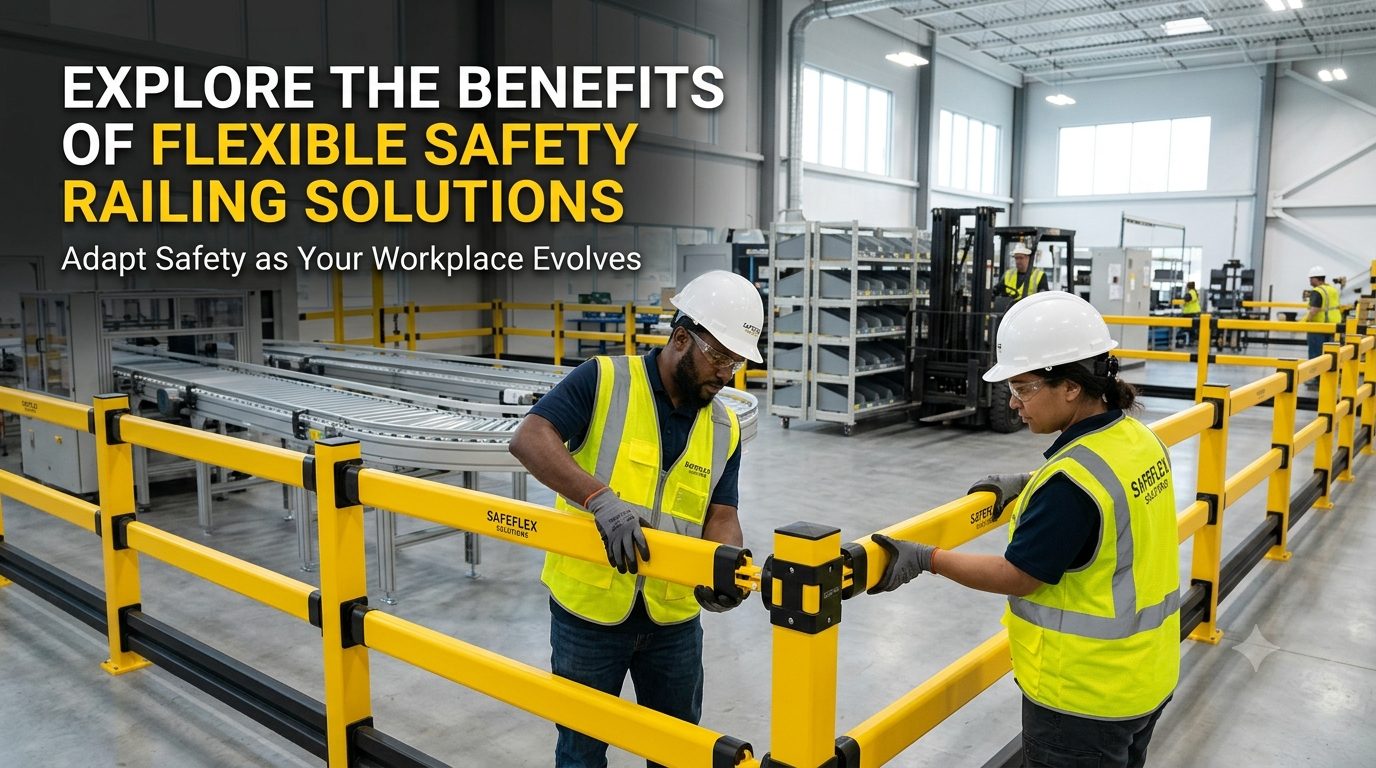
Every workplace has unique safety requirements.
From busy warehouses and manufacturing plants to commercial buildings and public facilities, no two sites are exactly the same.
Fixed safety barriers can provide protection, but they often become a limitation when layouts change or new equipment is introduced.
Flexible safety railing solutions offer a practical alternative by adapting to changing environments while maintaining high standards of protection.
As businesses grow, relocate machinery, or expand operations, having safety systems that can evolve alongside them reduces disruption and helps maintain compliance without the need for complete replacements.
This makes flexible railing systems a smart long-term investment rather than simply another safety expense.
Easy to Adapt to Different Environments
One of the greatest advantages of flexible safety railing systems is their ability to suit a wide variety of locations.
They can be installed around machinery, walkways, loading areas, mezzanine floors, rooftops, staircases, and access platforms without requiring a completely bespoke design.
Because these systems are modular, individual sections can often be adjusted, extended, or reconfigured when site layouts change.
This versatility means businesses can respond quickly to operational needs without sacrificing worker safety or investing in entirely new installations.
Whether protecting employees from fall hazards or guiding pedestrian traffic through industrial environments, adaptable railings provide reliable protection in almost any setting.
Faster Installation with Less Disruption
Traditional welded railings often require specialist labour, hot works permits, and significant downtime during installation.
Flexible modular systems simplify the process considerably.
Many solutions are designed for straightforward assembly using standard tools, allowing installation to be completed more efficiently.
This reduces disruption to daily operations, helping businesses avoid lengthy shutdowns that affect productivity.
The same advantage applies during maintenance or future modifications.
If part of the railing needs replacing or extending, only the affected section usually requires attention rather than removing the entire system.
Cost-Effective Over the Long Term
Initial installation costs are only one part of the overall investment in workplace safety.
Long-term maintenance, repairs, and future upgrades can often have a greater financial impact than businesses anticipate.
Flexible railing systems help reduce these ongoing costs by allowing damaged components to be replaced individually instead of replacing complete structures.
When facilities expand or layouts change, existing systems can frequently be modified rather than discarded.
This ability to reuse components makes flexible safety solutions particularly attractive for businesses planning future growth or regularly adapting their workspaces.
Improved Safety for Changing Workplaces
Modern workplaces rarely remain static.
Production lines evolve, storage areas expand, and new equipment is introduced to improve efficiency.
Safety systems need to keep pace with these developments.
Flexible railings allow businesses to maintain consistent protection even as operational requirements change.
New hazard zones can be secured quickly, while existing barriers can be adjusted to match updated workflows.
This proactive approach helps reduce the likelihood of accidents caused by outdated safety measures or temporary barriers that fail to provide adequate protection.
Durable Solutions That Stand the Test of Time
Industrial environments place considerable demands on safety equipment.
Constant use, heavy traffic, changing weather conditions, and exposure to moisture or chemicals can all affect long-term performance.
High-quality modular railing systems are designed with durability in mind, using corrosion-resistant materials that continue performing reliably for many years.
Their robust construction means they require minimal maintenance while providing dependable protection throughout their service life.
Reliable safety infrastructure also gives employers greater confidence that their investment will continue supporting workplace safety as the business evolves.
Supporting Compliance and Best Practice
Meeting health and safety obligations requires more than simply installing barriers.
Businesses must ensure protective systems remain suitable for their environment as operations change over time.
Flexible railing solutions make this process easier by allowing updates without major structural alterations.
As regulations, equipment, or workplace layouts evolve, safety barriers can be modified to continue providing appropriate protection.
This adaptability supports ongoing compliance while demonstrating a proactive commitment to employee wellbeing and risk management.
For organisations looking for adaptable systems, key clamp handrail fittings provide a versatile foundation that can be configured for a wide range of workplace applications without the need for complex fabrication.
A Smarter Investment in Workplace Safety
Flexible safety railing solutions offer far more than physical protection.
Their adaptability, durability, and ease of modification help businesses respond confidently to changing operational demands while controlling long-term costs.
Rather than viewing safety railings as fixed infrastructure, organisations can benefit from systems that grow alongside their facilities.
By investing in flexible solutions, businesses create safer working environments, reduce maintenance challenges, and ensure their safety measures remain effective for years to come.
Hope you’ve found our article, The Benefits of Flexible Safety Railing Solutions useful.
Thank you for taking the time to read my post. If you’d like to add a comment or thought on this post, please use the comments section below. I can also be contacted via the online contact form. Keep up to date with the latest news on social media.